
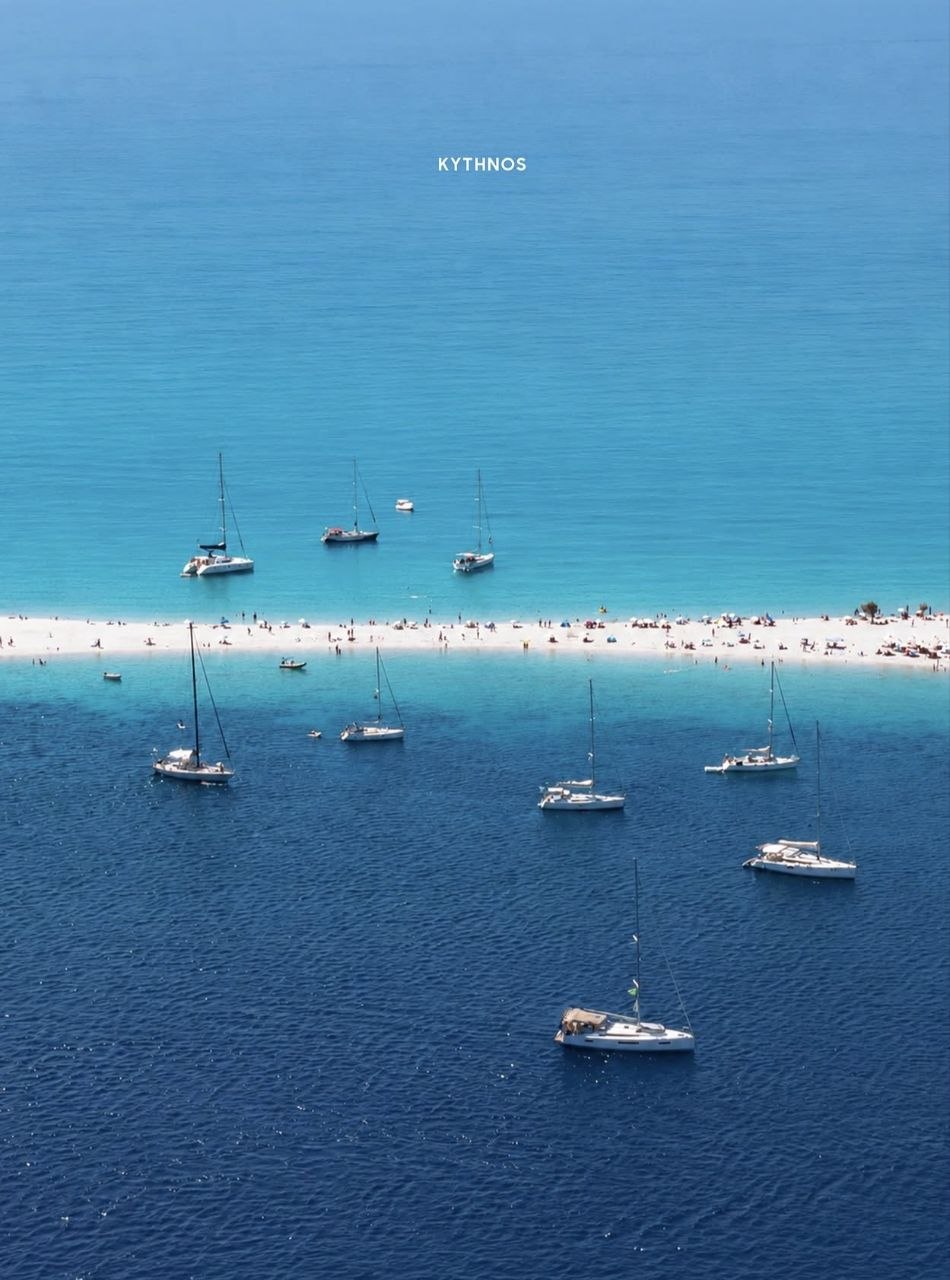
The wind fills the sails before you’ve finished your coffee. The harbor recedes and the open channel stretches out — a corridor of deep water between granite headlands that have caught the morning light for thousands of years.
You are not a passenger here. You are the crew. The tiller is warm in your hand. The sail trim is yours to read. And the islands come at you one by one, each with its own harbor, its own rhythm, its own reason to stop and drop anchor.
Sailing in Greece is the closest thing to real freedom most people will ever experience. Not the abstract kind. The physical kind — wind direction, tide tables, and the choice to stay or go.
Why the Greek Islands Are Made for Sail
The geography of the Aegean is a conspiracy to make you fall in love with the sea. The islands are close enough that you never lose sight of land. The harbors are plentiful — natural amphitheaters carved by time, with tavernas that appear exactly when you need them. The prevailing winds are reliable: the meltemi blows from the north in summer, strong enough to keep you moving, steady enough that you learn to trust it.
You sail close-hauled between islands, the water changing color with every depth reading. Deep indigo in the channels. Pale jade over sandy bottoms. Electric blue where the underwater springs feed the sea. You can read the bottom from the deck — ancient amphorae scattered on the seabed, shadows of fish moving through eelgrass meadows.
The Daily Rhythm
A Greek sailing day follows an ancient pattern. You wake at first light when the sea is flat and the air is cool. You sail through the morning while the breeze builds. You anchor in a new bay by early afternoon. You swim. You eat. You sleep in the heat of the day. Then you sail again in the golden evening light with a glass of wine in your hand and the autopilot holding course.
There are no deadlines on this schedule. No meetings. No notifications that matter. The only urgency is a rising wind or a fading sunset. Everything else can wait until tomorrow’s passage.
The Harbors You Will Remember
Naoussa, Paros — A fishing harbor turned perfect sailing stop. Whitewashed cube houses, a Venetian fortress crumbling into the sea, and seafood tavernas where the catch comes off the boat and onto your plate within an hour.
Mandraki, Nisyros — A volcanic island with a harbor that feels like a secret. Thermal springs warm the water around your hull. The village climbs the caldera wall. You are the only yacht in sight.
Ornos, Mykonos — Shelter from the meltemi, turquoise water, and a sunset that belongs on a postcard but somehow feels private when you watch it from the deck.
Vathy, Ithaca — The deep, protected harbor of Odysseus’s home island. You moor under the walls of an ancient acropolis and swim where heroes have swum before you.
What It Costs and What It’s Worth
A week-long bareboat charter in the Cyclades starts at around €2,000 in shoulder season for a 40-foot monohull, split between four people. Add €500 for provisions, mooring fees, and diesel. That’s €625 per person for a week that you will remember for the rest of your life.
Compare that to a resort holiday — same money, same duration, but you wake up in the same room every morning instead of a new bay, a new anchorage, a new island spread out before you like a gift you unwrap slowly.
The Final Word
Sailing in Greece is not a vacation trend. It is the original Mediterranean experience — the one that Phoenician traders, Homeric heroes, and wandering philosophers all shared. Wind. Sea. Islands. Freedom.
The only question is whether you will stay on shore and read about it, or cast off and feel it for yourself.
The wind is blowing. The anchor is up. The next island is waiting.
Discover more from Mediterranean Maxxing
Subscribe to get the latest posts sent to your email.