
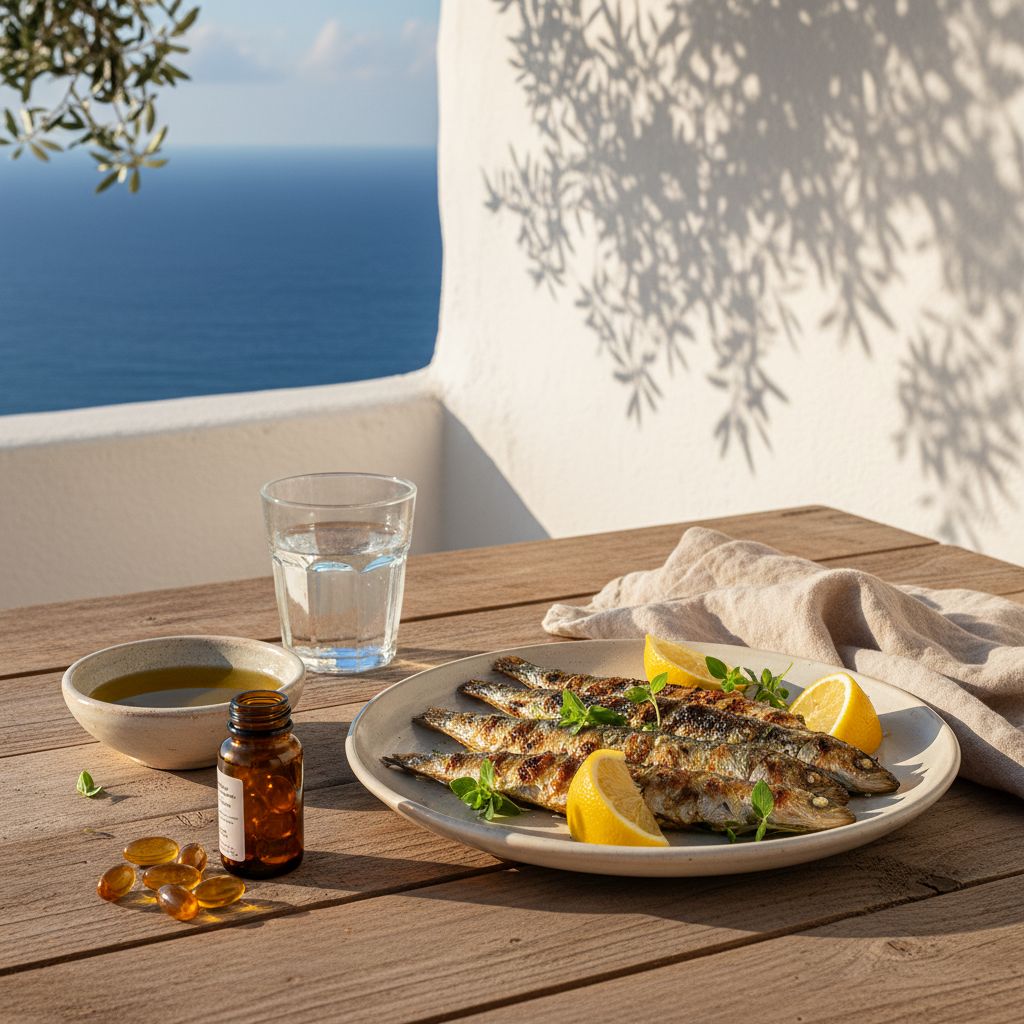
On a Greek island, you do not need a podcast to tell you omega-3 is important. The fishing boats come back before breakfast. Lunch is sardines, mackerel, or grilled fish straight from the sea. Dinner is more of the same.
This is not a supplement regime. It is just how people eat.
If your life is not that easy, omega-3 in supplement form is one of the very few additions worth taking seriously. Real food first, smart supplement second.
Why Omega-3 Is Non-Negotiable in Mediterranean Living
The Mediterranean diet has beaten every trendy eating plan of the last 30 years in real studies. It has done it with boring, repeatable inputs: olive oil, vegetables, legumes, fruit, whole grains, and a steady amount of fatty fish.
The fish is not optional. EPA and DHA, the two omega-3 fatty acids that matter most, come almost entirely from fatty fish and seafood. Plant sources (flax, chia, walnuts) give you ALA, which your body converts to EPA and DHA badly, not well.
Most modern people eat almost no fatty fish. That is where omega-3 supplements earn their shelf space.
What Omega-3 Actually Does in Real Life
Keep the framing grounded and lifestyle-based.
- Supports cardiovascular health, the single biggest long-term health factor
- Supports joint comfort in people who train, walk, hike, or sit a lot
- Supports mood and cognitive steadiness across the week
- Balances a modern diet that is usually way too heavy in omega-6
- Pairs perfectly with a Mediterranean-style meal pattern you are already building
It is not a miracle pill. It is a correction for a diet most people do not realize is lopsided.
Real Food First: How Mediterraneans Actually Get Omega-3
Before we talk capsules, eat like a Greek grandmother.
- Sardines, anchovies, mackerel: cheap, oily, mineral-rich, and traditional
- Fresh whole fish from the market, grilled simply with lemon and oregano
- Smaller wild fish over giant farmed fillets when possible
- Local seafood stews and soups (cold water, clean broth)
Two to three proper fish meals per week does most of the job. Supplement after that is a top-up, not a replacement.
When a Supplement Actually Makes Sense
Not everyone eats fish like an islander. A daily omega-3 capsule earns its place if:
- You live inland or far from good seafood
- You eat fish less than twice per week
- You train hard and want joint support
- You are older and want steady cardiovascular and cognitive support
- You want a simple, consistent backup when travel or life gets chaotic
If you already eat fish five days a week, you probably do not need capsules. If you eat it once a month, you really do.
How to Take Omega-3 Well (The Mediterranean Timing Guide)
Keep it boring and repeatable.
1. With a real meal
Omega-3 is a fat. Take it with food that contains some fat (olive oil, eggs, fish, nuts) for better absorption.
2. Daily, not only when you remember
The benefits are slow and cumulative. Treat it like brushing your teeth, not a hangover cure.
3. Paired with your existing Mediterranean routine
Lunch with olive oil and fish. Dinner with vegetables, grilled protein, and a small glass of wine. Omega-3 capsule with one of those meals. Done.
How Much to Take
Keep it sensible.
- General wellness: around 1000 to 2000 mg combined EPA and DHA per day
- Active, training hard, joint focus: 2000 to 3000 mg combined EPA and DHA
- More is not automatically better; read the EPA and DHA numbers, not total oil
- Consult a doctor if you are on blood thinners or have a bleeding disorder
Look at the EPA and DHA numbers on the label, not the total fish oil number. Many cheap brands hide low EPA/DHA behind large-sounding totals.
What to Look For in a Good Omega-3
The shelves are full of oxidized, low-potency, overpriced options. Filter for this.
- High combined EPA and DHA per capsule (read the label, not the front)
- Triglyceride or re-esterified form, not only ethyl ester, when possible
- Third-party testing for purity, heavy metals, and oxidation
- Sourced from smaller fish (sardine, anchovy, mackerel) rather than large predators
- A fresh, almost odorless capsule when you open the bottle
If a fish oil capsule tastes rancid, smells aggressive, or leaves a fishy burp an hour later, it is probably oxidized. Toss it.
Who Should Keep Omega-3 in the House
- Anyone who does not eat fatty fish multiple times per week
- People over 40 who want long-term cardiovascular support
- Active people with joints that feel every training week
- People living in climates where good seafood is rare or expensive
- Anyone building a Mediterranean lifestyle from a modern Western starting point
You do not need twenty supplements. Creatine and omega-3 will cover 90% of what a normal person actually benefits from.
Common Mistakes to Avoid
Three things ruin this habit.
- Buying a cheap capsule with a huge “1000 mg fish oil” label but only 200 mg of EPA and DHA combined
- Taking it on an empty stomach and getting reflux
- Using it as an excuse to skip fish entirely. Real fish wins
The Mediterranean Logic Behind This Habit
Mediterranean living already gives you most of what modern health trends chase: sun, movement, olive oil, fruit, real bread, fresh fish, community. Omega-3 is a quiet extra that closes the gap if your life does not cooperate with ideal conditions.
It is small, daily, unglamorous, and effective. That is exactly this magazine’s kind of habit.
Where to Get It
We keep a clean, no-nonsense option in the shop: our Omega-3, chosen for high EPA and DHA, clean sourcing, and real Mediterranean quality instead of supermarket shortcuts.
Eat fish when you can. Take your capsule on the days you cannot. Keep it boring.
Discover more from Mediterranean Maxxing
Subscribe to get the latest posts sent to your email.