

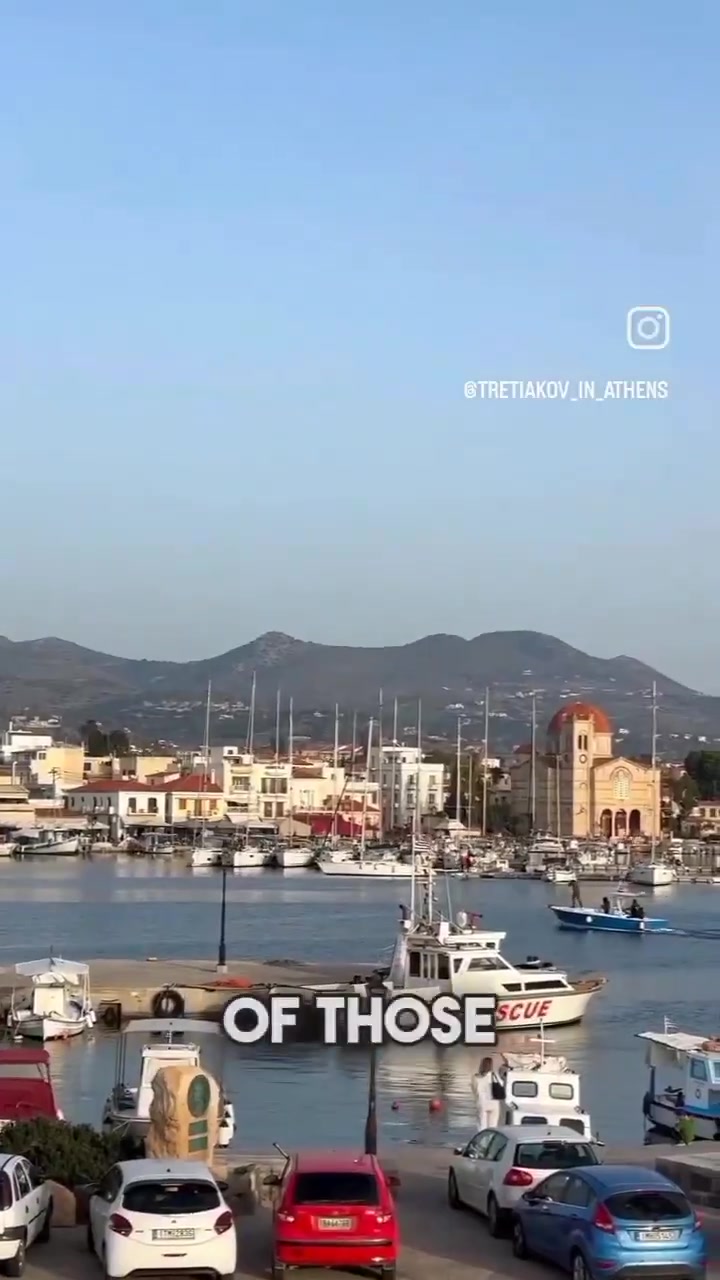
There’s a video making the rounds on Instagram. Handle: @TRETIKOV_IN_ATHENS. It’s a simple reel shot around Aegina Island and the Athens coast. A harbour at golden hour. A cat lounging on a stone wall. A fisherman untangling his nets. A man walking the waterfront. A street cafe in the afternoon sun.
And scattered across the scenes, text overlays that form a kind of philosophical poem:
Of those…
Two years that loved it…
But if you have everything except…
Cars and property…
How to answer but that phrase.
It’s not a complete sentence. It’s not meant to be. It’s a meditation — the kind that Greeks have been turning over in their minds for three thousand years.
The question the video is dancing around is this: What do you actually have, if you have everything except the things that matter?
The Greek Answer
The Greek mentality isn’t complicated. It’s been shaped by sun, sea, stone, and survival. By a land that gives just enough but never too much. By a history that taught people that the only thing you can really count on is today, and the people around you.
Walk the harbour in Aegina town. The fishermen are not rich. Their boats are small, their nets are patched, their hands are stained. But they own their time. They sit for coffee at 11am. They nap at 2. They’re back on the water at 5, when the light is right and the fish are biting. They have been doing this for generations, and their fathers did it before them.
That’s not laziness. That’s wisdom.
The Greek word φιλότιμο (philotimo) doesn’t translate well. It means something like “love of honour” — a personal moral compass that prioritises community, integrity, and hospitality over material gain. It’s why a Greek fisherman will give you half his catch before you ask. It’s why the taverna owner brings you dessert “from the house.” It’s why a stranger on the street will walk you ten blocks to show you where you’re going, even if it’s out of his way.
You can’t buy that with cars and property.
Aegina as a Mirror
Aegina is the perfect place to see this mentality in action. An hour from Athens by ferry, but a world away in pace. The pistachio groves. The tiny churches. The harbour where the same old men have sat at the same café tables for forty years, watching the same boats come and go.
On Aegina, the currency is not money. It’s time. Time to talk. Time to wait. Time to sit and watch the light change over the Saronic Gulf. Time to eat lunch for two hours. Time to argue about politics with a complete stranger and leave as friends.
This is what “having everything except” means. Except the rush. Except the grind. Except the constant optimisation of every moment for maximum output.
The Two Years That Loved It
The video’s phrase — “two years that loved it” — suggests a relationship with a place. Two years in Aegina. Two summers. Two seasons of learning what matters.
The first year, you’re a tourist. You take photos of the harbour. You buy pistachios. You marvel at the blue of the sea.
The second year, you start to understand. The harbour is not a view — it’s a livelihood. The pistachios are not a souvenir — they’re a lifetime of cultivation. The blue is not a colour — it’s a way of measuring depth, distance, and the time until the next swim.
Greek mentality is not something you read about in a book. It’s something you absorb by being still, in a place like Aegina, long enough for the rhythm to find you.
How to Answer
How do you answer the question the video poses? But if you have everything except…
Except peace. Except time. Except community. Except the freedom to sit in the sun with no agenda.
The Greek answer, passed down from Epicurus to the modern taverna owner, is this: the good life is not about having more. It’s about needing less, and loving what you have.
Cars and property are fine. But if you have them and nothing else — no harbour to walk, no cat to keep you company, no fisherman to nod at, no café to sit in, no time to waste — then what do you really have?
The Greeks figured this out a long time ago. That’s why they invented philosophy, democracy, and the three-hour lunch.
That’s the Greek mentality. And Aegina is where you go to feel it.
Discover more from Mediterranean Maxxing
Subscribe to get the latest posts sent to your email.