
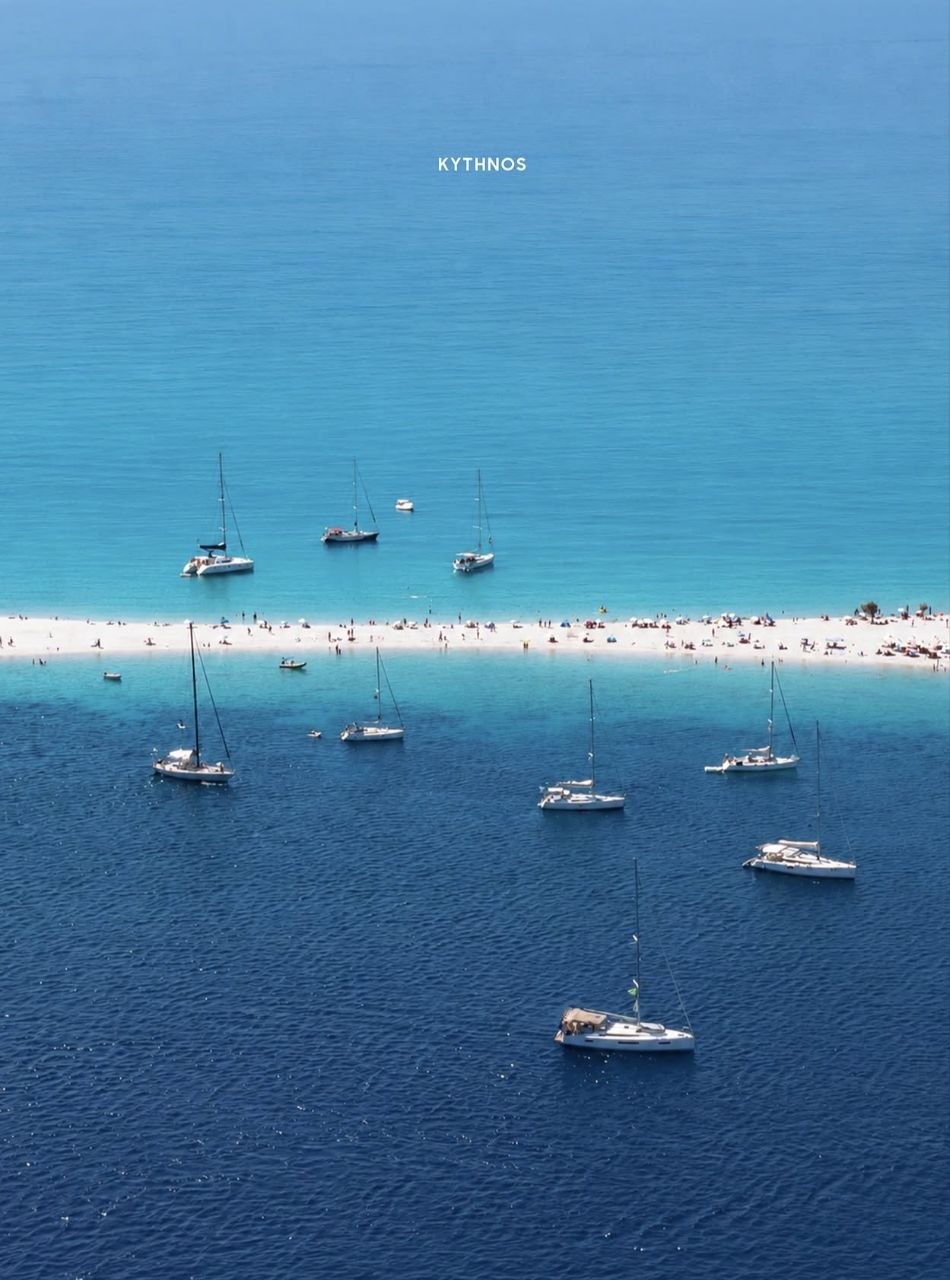
You drop the mooring lines and the engine cuts to a low burble as you clear the harbor mouth. Behind you, whitewashed houses climb a hillside dotted with tamarisk trees. Ahead, the sea is a deep, rolling blue that shifts to turquoise where the sandbars rise. You reach down and open the cooler — feta packed in brine, fat Kalamata olives, a loaf of crusty bread, and a bottle of cold Assyrtiko. This is not a vacation. This is how you were meant to live.
Sailing in Greece is not about covering distance. It’s about the rhythm of small harbors, the anchorages you find by instinct, and the food that tastes like it was grown for this exact moment. And at the center of it all — Greek cheese.
The Provisioning Ritual
Every proper sailing trip in Greece starts in a village market. Not a supermarket — a proper μανάβικο with crates of tomatoes that still smell of earth, bunches of wild oregano hanging from hooks, and a counter where the cheesemonger cuts you a slab of graviera from a wheel the size of a car tire.
You learn quickly: stock up on hard cheeses that travel well. Kefalograviera holds up in the heat. Mizithra stays fresh for days. And feta — you buy it by the kilo, submerged in brine, and it becomes the centerpiece of every meal. Crumbled over a tomato salad at noon. Melted on grilled bread at sunset. Eaten in chunks with a drizzle of olive oil while you watch the stars come out.
The Greek Island Cheese Map
Each island group has its own cheese tradition, and sailing gives you access to the real producers:
Cyclades — Kopanisti from Mykonos, a spicy, peppery spread that wakes up any palate after a morning swim. Chloro from Santorini, a fresh cheese made from goat and sheep milk that pairs with the island’s volcanic white wines.
Ionian Islands — Ladotyri from Zakynthos, aged in olive oil until it develops a sharp, tangy bite. Perfect on a boat because it needs no refrigeration for the first few days.
Dodecanese — Pichtogalo from Chios, a creamy, thick yogurt-cheese that you eat with a spoon and local honey for breakfast on deck.
Sporades — Galotyri from Skiathos, a soft, tangy cheese spread that belongs on crusty bread with a slice of sun-warmed tomato.
Deck Dining at Sunset
The yacht settles at anchor in a quiet bay. The wind drops. You break out the cutting board and assemble the only meal that matters: cheese, bread, olives, tomatoes, oregano, olive oil. The cheese is at cabin temperature, which is exactly the right temperature. You pour the wine. The sun turns the cliffs the color of honey.
This is the Mediterranean equation: good light, simple food, salt air, and the sound of water against the hull. Every bite tastes earned because you moved through the sea to get here. Every sip tastes truer because it’s chilled in seawater, not a refrigerator.
Practical Truths
A bareboat charter in Greece costs less than you think. High season (July–August) is crowded and windy. Shoulder season (May–June, September–October) gives you settled seas, empty anchorages, and markets full of late-summer produce.
You do not need a skipper certification beyond a basic keelboat license for most Greek charters. The winds are predictable — the meltemi builds in the afternoon and dies at sunset. The harbors are never more than a few hours apart. And every village has a taverna where you can restock on cheese.
The Verdict
There are faster ways to see the Greek islands. There are cheaper ways to eat Mediterranean food. But there is no combination that delivers what a sailing trip does: the freedom to move on your own schedule, the discipline of wind and tide, and a slab of graviera eaten with salt-crusted fingers on a boat that rocks you to sleep.
This is the real Mediterranean. Not the resort version. The one you sail into.
Discover more from Mediterranean Maxxing
Subscribe to get the latest posts sent to your email.